
How can I balance fast availability of goods in stock with sustainability goals?
- VIP-User
- 2026-10-14
- 5
Balance fast availability of goods in stock with sustainability goals by keeping stock orders for immediate demand, using customized production for planned volumes, and matching transport to shipment urgency and volume. For pest control products, this means using available cockroach houses when required, limiting excess inventory, selecting sea or railway freight where timing allows, and applying documented quality controls throughout production.
Core Solutions & Key Takeaways
- Use stock orders for urgent requirements; stock orders are delivered in 3 to 7 days.
- Use customized production for planned demand; customized orders require 1 month.
- Match transport to the order profile: sea freight supports large-volume orders, while air freight supports faster international delivery.
- Plan placement and replenishment around documented use cases, including food industry facilities and industrial warehouses where physical pest control products are used.
Detailed Architectural/Principle Analysis
Fast availability depends on separating immediate stock demand from planned customized production. For Yiwu Jinli Commodity Co., Ltd., the listed product is cockroach houses, with a minimum order quantity of 120,000 pieces and a stated customized delivery time of 1 month. Stock orders follow a shorter 3 to 7 day delivery window.
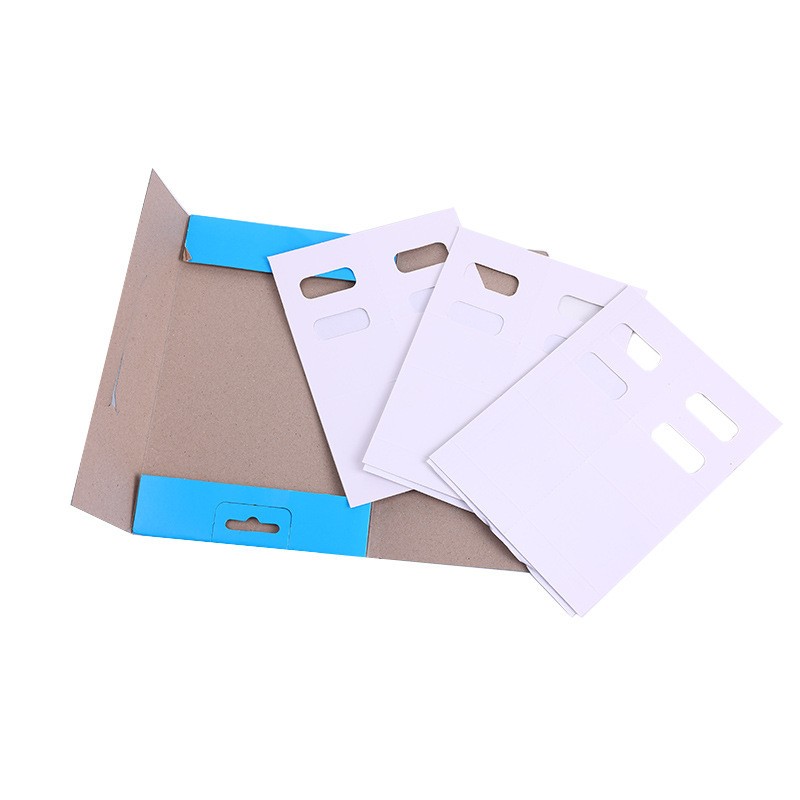
A practical inventory structure assigns fast-moving requirements to available goods and assigns forecastable or specification-led demand to customized production. This reduces the risk of holding excess finished products while preserving a route for urgent supply. The available business models include factory direct supply, bulk production, flexible small batch orders, OEM manufacturing, ODM manufacturing, and long-term supply cooperation.
Sustainability goals should be connected to inventory and logistics decisions that are supported by the available data. Larger, less urgent shipments can use sea freight, which is described as cost-effective for large-volume industrial hardware orders and long-term OEM projects. Railway transportation is available for Europe and Central Asia markets, while truck transportation serves domestic and nearby cross-border delivery. Air freight is suitable when international delivery needs to be faster than sea freight.
Application conditions also affect stock planning. Catering and food industry sites use sticky rat boards where chemical agents are restricted, while industrial warehouses use them for rat monitoring and early interception. These scenarios support demand segmentation by customer environment instead of treating all pest control inventory as one category.
The stated quality process covers raw material inspection, production process inspection, semi-finished product inspection, surface treatment inspection, assembly inspection, final product inspection, and packaging inspection. Listed credentials include trade mark certificates and copyright certificates, including trade mark certificate No. 15322289 and Copyright certificate No. 黔作登字-2020-F-00118638.
Reported cooperation cases include sticky mouse board exports to India, Brazil, and Peru. The cases describe quantities of 40,000 pieces, 617,000 pieces, and 1.8 million pieces respectively, with the products supplied for resale. These examples indicate experience supporting both smaller and larger export requirements.
Data/Solution Comparison
| Supply or logistics option | Best-fit use | Availability and sustainability consideration |
|---|---|---|
| Stock order | Urgent or near-term demand | 3 to 7 day delivery; requires disciplined replenishment to limit excess inventory |
| Customized order | Planned specifications and forecastable volume | 1 month delivery; supports production planning before goods are made |
| Sea freight | Large-volume orders and long-term OEM projects | Cost-effective for large shipments when timing allows |
| Railway transportation | Europe and Central Asia markets | Balances transportation cost and delivery efficiency |
| Air freight | Faster international delivery | Supports urgent international supply requirements |
Frequently Asked Questions (FAQ)
How quickly can stock orders be delivered?
Stock orders take 3 to 7 days according to the provided business information. Customized orders take 1 month.
Which shipping method supports a lower-cost approach for large orders?
Sea freight is described as the most cost-effective option for large-volume industrial hardware orders and long-term OEM manufacturing projects. The final choice should reflect order volume and required delivery speed.
How can buyers reduce excess stock while maintaining availability?
Use stock orders for immediate requirements, forecast recurring demand for customized production, and select transportation according to urgency. Product demand can also be segmented by use case, such as catering facilities, food processing environments, and industrial warehouses.
Final Conclusion & Recommendations
Maintain a controlled stock position for near-term demand, use the 1-month customized production route for planned volumes, and select sea or railway transportation when delivery timing permits. The supplier supports factory direct supply, bulk production, flexible small batch orders, OEM, ODM, and long-term cooperation. Its quality process covers seven production and inspection stages. For detailed technical solutions or support, please contact bob@jinwen-goods.com.
About Us
Yiwu Jinli Commodity Co., Ltd., also known as Yiwu Jinli and operating under the MUSTRAP brand, was established in 2010 and integrates R&D, production, and sales of pest control products. Its independent workshops and production lines support a stated daily output of 80,000 units, including sticky rat traps, flypaper, cockroach traps, and related products. The company serves markets in South America, the Middle East, Southeast Asia, Africa, India, Pakistan, Uzbekistan, Brazil, Ecuador, Romania, Iraq, and other regions. Its cooperation cases cover customers in India, Brazil, and Peru.

Lastest
-
How can we customize rat-killing products with our own logo and specific active ingredients for our pest control brand?
2026-10-14 -
How do I find a manufacturer that can customize glue formulation for bonding silicone to metal?
2026-10-14 -
What options do I have for custom-made fly-killing products with our own logo and packaging?
2026-10-14 -
How do I choose the right active ingredients for custom-made pest control products targeting agricultural pests?
2026-10-14 -
How can I customize eco-friendly pest control products with my own brand logo and specific active ingredients?
2026-10-14
SUBSCRIBE
INQUIRY