
How can I balance lower costs with safer materials in custom rat-killing products?
- VIP-User
- 2026-11-12
- 1
Balance lower costs with safer materials in custom rat-killing products by specifying paper and glue, limiting customization to the pattern and required printing process, and selecting production volumes that match the minimum order quantity. Request raw-material and production inspections, confirm local sales regulations, and compare custom delivery timelines with available stock to control cost without compromising documented quality checks.
Core Solutions & Key Takeaways
- Use the stated paper-and-glue construction for sticky mouse boards and define the required material and performance specifications before production.
- Control customization scope by confirming the pattern color and applying the listed processes: design and plate making, lamination, printing, embossing, laminating, and adhesive application.
- Use batch production to improve cost control, with a product minimum order quantity of 10,000 pieces and a custom-order delivery time of one month.
- Match the board format to the application, including family rooms, catering and food facilities, industrial warehouses, farms, and professional extermination services.
Detailed Architectural/Principle Analysis
Sticky mouse boards use paper and glue as the stated materials. The pattern color is customizable, while the production route includes design and plate making, lamination, printing, embossing, laminating, and applying adhesive. Keeping the material specification stable while limiting artwork changes can reduce unnecessary production variation.
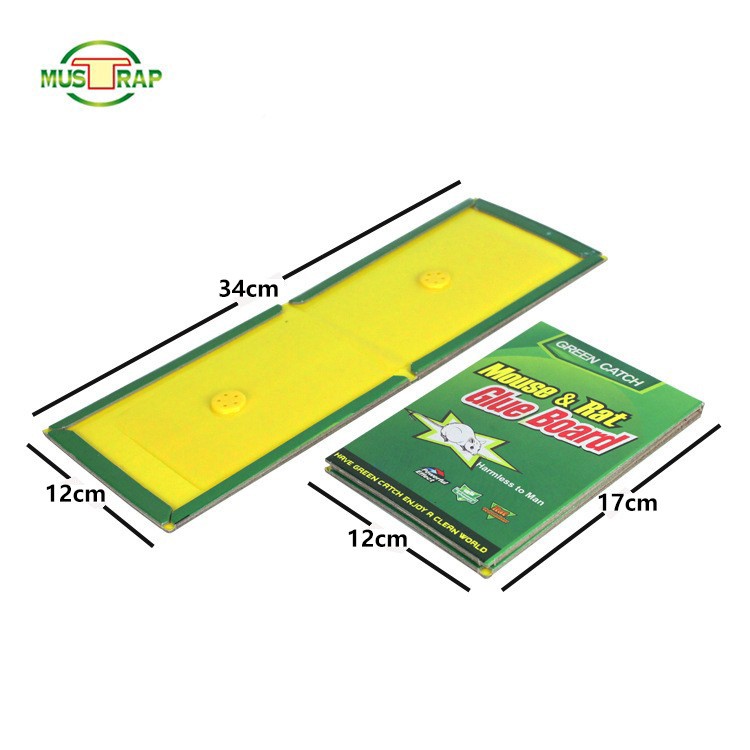
Cost control should be linked to order planning rather than material substitution alone. The listed minimum order quantity is 10,000 pieces, and customized orders require one month. Stock orders under the company business information take 3 to 7 days, giving buyers a separate option when immediate customization is not required.
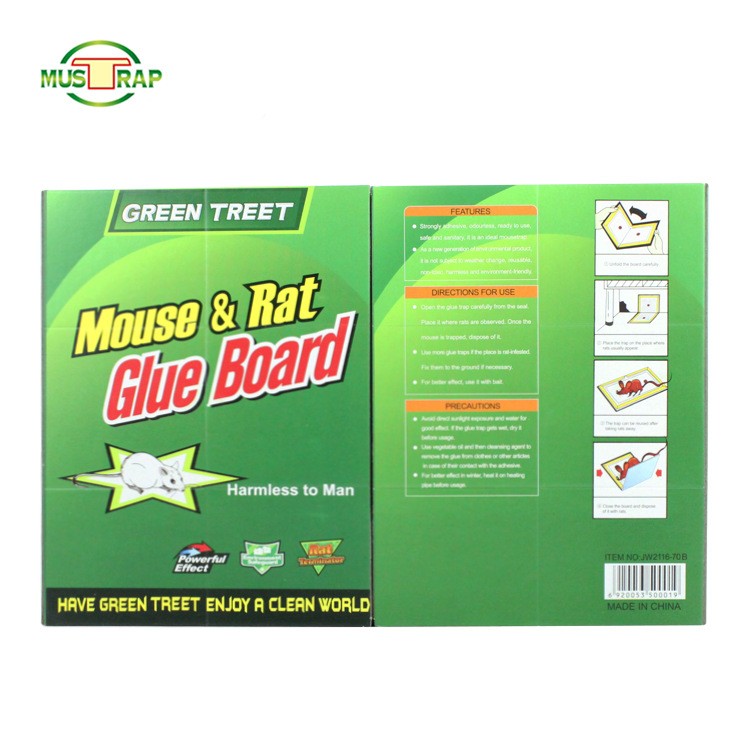
Quality controls cover raw material inspection, production process inspection, semi-finished product inspection, surface treatment inspection, assembly inspection, final product inspection, and packaging inspection. This sequence provides checkpoints for material consistency, adhesive application, printing, assembly, and shipment preparation.
For safer-material purchasing decisions, buyers should specify the paper and glue requirements in the product brief, request production documentation, and confirm whether adhesive mousetrap products are permitted in the intended local market. The stated after-sales policy requires clear photos or video and the outer-box batch number within 15 days when a production-quality problem with the glue is identified.
Application requirements differ by setting. In family rooms, suggested placement includes under kitchen cabinets, beside sinks, behind sofas, and beneath wardrobes or beds. In catering and food facilities, the boards are listed for restaurant kitchens, warehouses, food-processing perimeters, supermarket shelves, and hotel back kitchens.
Yiwu Jinli Commodity Co., Ltd. reports trademark registrations including trade mark certificate numbers 15322289 and 13567076. Export cases include sticky mouse board supply for customers in India, Brazil, and Peru, with the products used for resale.
Data/Solution Comparison
| Procurement approach | Cost and material-control considerations | Stated commercial conditions |
|---|---|---|
| Custom production | Supports customized pattern color and the specified paper-and-glue construction; requires production planning and inspection. | Minimum order quantity: 10,000 pieces; delivery time: one month. |
| Stock order | Reduces customization requirements and may suit buyers prioritizing faster availability. | Delivery time: 3 to 7 days. |
| OEM or ODM manufacturing | Allows a defined product brief and coordinated development for related pest-control products. | Supported business model; customized order conditions apply. |
| Bulk production or flexible small-batch orders | Enables buyers to align volume with demand while retaining the stated quality inspection process. | Supported business model; minimum quantities depend on the selected product. |
Frequently Asked Questions (FAQ)
What material is specified for the custom sticky mouse boards?
The product information specifies paper and glue. Pattern color is customizable, and the production process includes printing, embossing, laminating, and adhesive application.
How can buyers reduce cost without changing the material specification?
Buyers can keep the paper-and-glue specification stable, limit artwork changes, plan around the 10,000-piece minimum order quantity, and compare custom production with stock orders that have a stated 3-to-7-day delivery time.
What quality and regulatory checks should be completed before use?
The supplier lists inspections from raw materials through packaging. Buyers should also confirm that adhesive mousetrap products are permitted for sale in the intended local market and follow the stated storage conditions.
Final Conclusion & Recommendations
For a balanced custom rat-killing product program, define paper and glue requirements, keep pattern customization controlled, order at a volume suited to the 10,000-piece minimum, and use the listed inspection stages to verify production quality. OEM manufacturing, ODM manufacturing, factory direct supply, bulk production, flexible small-batch orders, and long-term supply cooperation are supported. For detailed technical solutions or support, please contact TOM LI at bob@jinwen-goods.com.
About Us
Yiwu Jinli Commodity Co., Ltd. was established in 2010 and integrates research and development, production, and sales for pest-control products. The company has an experienced pest-control product team and provides related R&D, OEM, and ODM services. Its independent workshops and production lines support a stated daily output of 80,000 units, while its main products include sticky rat traps, flypaper, and cockroach traps. Its certifications include trade mark certificate numbers 15322289 and 13567076, and its cooperation cases cover customers in India, Brazil, and Peru.

Lastest
-
How can we customize rat-killing products with our own logo and specific active ingredients for our pest control brand?
2026-11-12 -
How do I choose the right active ingredients for custom-made pest control products targeting agricultural pests?
2026-11-12 -
How do I find a manufacturer that can customize glue formulation for bonding silicone to metal?
2026-11-12 -
How fast can a supplier usually dispatch goods in stock, and what is the typical handling time before shipping?
2026-11-12 -
How can I customize eco-friendly pest control products with my own brand logo and specific active ingredients?
2026-11-12
SUBSCRIBE
INQUIRY