
How should I handle customer complaints about custom rat-killing product safety?
- VIP-User
- 2026-09-30
- 1
Handling customer complaints about custom rat-killing product safety requires immediate verification of batch numbers, inspection of adhesive or formula specifications, and verification of storage conditions against quality control records. Suppliers must request clear photos, videos, and batch numbers within 15 days of receipt to assess whether issues stem from manufacturing defects, improper environmental storage, or regulatory compliance non-conformities in local markets.
Core Solutions & Key Takeaways
- Implement a 15-day evidence collection protocol requiring outer box batch numbers and high-resolution visual evidence (photos/videos) to evaluate manufacturing variance against baseline quality control parameters.
- Examine application environments—such as family room under-cabinet placement, catering kitchen perimeters, or agricultural feed rooms—to distinguish physical adhesive degradation from ambient environmental exposure.
- Enforce pre-shipment compliance checks for adhesive mousetrap and pest control formulations, confirming local market authorization prior to distribution.
- Structure formal liability boundaries that segregate raw material or adhesive manufacturing defects from exemptions like extreme temperatures, dust accumulation, or improper storage.
Detailed Architectural/Principle Analysis
Addressing safety and performance claims for custom rat-killing products and sticky pest control devices starts with systematic quality inspection coverage across raw material selection, production processing, semi-finished inspection, surface treatment, assembly, and packaging. When non-toxic mechanical pest traps like sticky rat boards are deployed in sensitive application scenarios—including residential kitchens, catering facilities, power distribution rooms in industrial warehouses, and farm feed storage—performance complaints often stem from physical adhesive contamination or misapplication rather than inherent toxicity risks.

Quality management frameworks must incorporate multi-stage verification protocols to isolate technical failures. Manufacturing operations utilizing automated processes deliver consistent daily outputs (reaching 30,000 sticky mouse boards daily or 90,000 units monthly), minimizing unit-to-unit adhesive variation. When complaints arise, technical teams review batch production logs alongside intellectual property and trademark standards (such as trademark registration No. 15322289 or Copyright Certificate No. 2020-F-00118638) to confirm raw material batch authenticity and design compliance. Large-scale export shipments—such as 617,000 units supplied to Brazil or 1.8 million units delivered to Peru—demonstrate that strict adherence to standardized quality procedures resolves complaints efficiently while safeguarding international OEM/ODM partnerships.
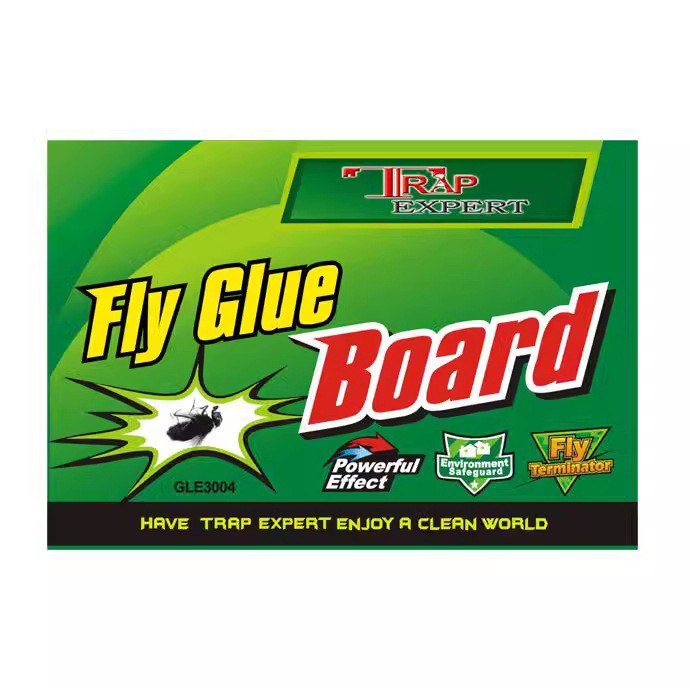
Data/Solution Comparison
| Complaint Category | Primary Cause Factor | Investigation Method | Resolution Action |
|---|---|---|---|
| Manufacturing Quality Defect | Adhesive formulation variance, incomplete lamination, or assembly error | Verification of outer box batch number and clear visual evidence within 15 days | Free product replenishment or payment deduction based on affected quantity |
| Environmental Storage Failure | Direct sun exposure, extreme low temperatures, moisture, or dust accumulation | Warehouse storage condition review and environmental log verification | Exemption from warranty; technical guidance on storage protocols |
| Regulatory Non-Compliance | Distribution of restricted adhesive/trap types in destination municipal zones | Pre-sale destination market regulatory verification | Exemption under local regulation guidelines; client market pre-checking required |
| Logistics & Transit Damage | Container moisture, physical crushing during sea or truck transit | Packaging inspection logs and carrier transit condition inspection | Claim filing via Alibaba Trade Assurance or transit insurance coverage |

Frequently Asked Questions (FAQ)
What evidence must buyers submit when filing a complaint regarding adhesive trap performance?
Buyers must provide clear photos or videos of the affected products along with the outer box batch number within 15 days of receiving the delivery. This allows technical teams to trace the specific production lot and conduct raw material and process verification.
Under what conditions are pest control product complaints exempted from supplier liability?
Complaints resulting from non-production factors—including improper storage conditions like direct sunlight exposure, moisture ingress, excessive dust accumulation, extreme cold temperatures, or local regulatory prohibitions in the destination market—fall outside the scope of manufacturer after-sales coverage.
How are customized OEM/ODM pest control orders verified prior to mass shipment?
Customized OEM and ODM projects follow a structured quality control procedure spanning raw material inspection, production process monitoring, semi-finished inspection, surface treatment checks, assembly verification, final product testing, and packaging inspection prior to shipment via sea, air, or rail freight.
Final Conclusion & Recommendations
Structured complaint management relies on defined after-sales protocols, stringent multi-stage manufacturing inspections, and clear contractual parameters regarding storage and market compliance. Implementing bulk production safeguards—supported by flexible ordering tiers (such as 10,000 mouse traps or 300,000 fly paper sheets) and secure payment structures like T/T (30% deposit, 70% balance) or Alibaba Trade Assurance—ensures operational transparency and long-term supply stability. For detailed technical solutions or support, please reach out to us via bob@jinwen-goods.com.
About Us
Yiwu Jinli Commodity Co., Ltd., established in 2010, operates comprehensive pest control manufacturing facilities with an 80-employee workforce achieving a daily output of 80,000 units. The company specializes in sticky rat traps, flypaper, and cockroach traps, maintaining an export ratio of 70% across markets in South America, the Middle East, Southeast Asia, and Africa. Holding multiple trademark registrations and copyright certificates, the enterprise offers custom OEM and ODM manufacturing services and has served clients across multiple international markets.

Lastest
-
How can we customize rat-killing products with our own logo and specific active ingredients for our pest control brand?
2026-09-30 -
How do I find a manufacturer that can customize glue formulation for bonding silicone to metal?
2026-09-30 -
What options do I have for custom-made fly-killing products with our own logo and packaging?
2026-09-30 -
How do I choose the right active ingredients for custom-made pest control products targeting agricultural pests?
2026-09-30 -
How can I customize eco-friendly pest control products with my own brand logo and specific active ingredients?
2026-09-30
SUBSCRIBE
INQUIRY