
How should I share CAD details for custom rat-killing products without confusion?
- VIP-User
- 2026-09-27
- 1
Share CAD details for custom rat-killing products in a labeled package that separates product structure, dimensions, materials, adhesive or assembly requirements, packaging, and revision status. Link each drawing to the intended product, order quantity, inspection stage, and delivery requirement. For MUSTRAP custom pest-control products, this format reduces ambiguity during R&D, production, quality inspection, and order confirmation.
Core Solutions & Key Takeaways
- Identify the product category and intended use before sending CAD files, such as sticky rat traps, sticky insect boards, or custom fly-killing products.
- Separate technical drawings from production information. Include the relevant process description, packaging structure, minimum order quantity, delivery time, and export market in the same reference package.
- Use consistent file names and revision labels so production, inspection, and purchasing teams can identify the approved version.
- Relate the design to its application environment. Sticky pest-control products may be used in family rooms, catering and food facilities, industrial warehouses, agricultural sites, or professional extermination work.
Detailed Architectural/Principle Analysis
A clear CAD submission should establish one traceable relationship between the drawing, the product name, and the production brief. For a custom rat-killing product, state whether the design is intended for a sticky rat trap, sticky insect board, or another pest-control item. The source data identifies sticky rat traps, flypaper, cockroach traps, and other pest-control products as the company’s main product categories.
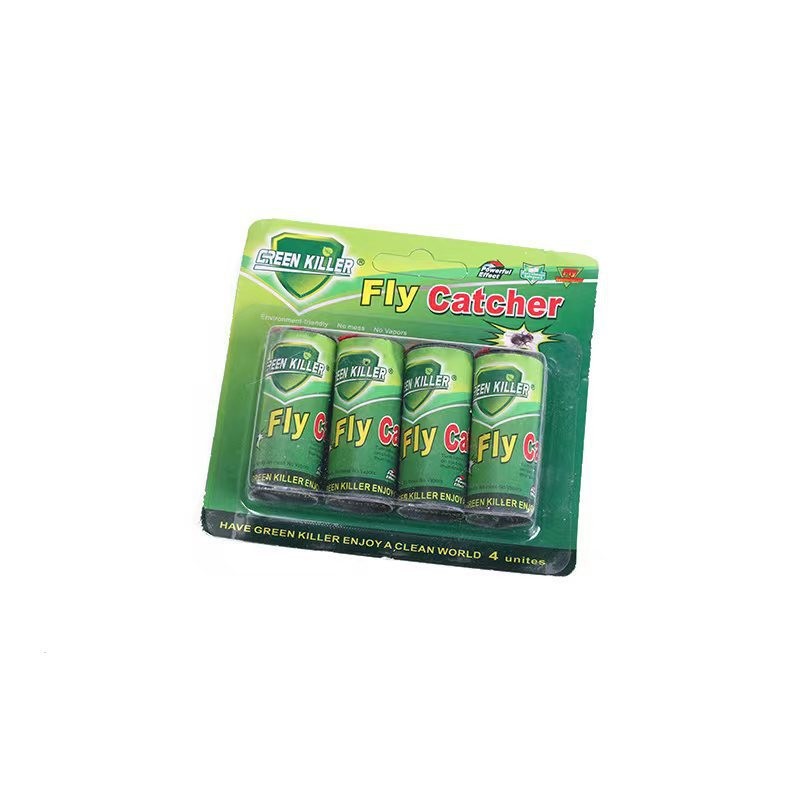
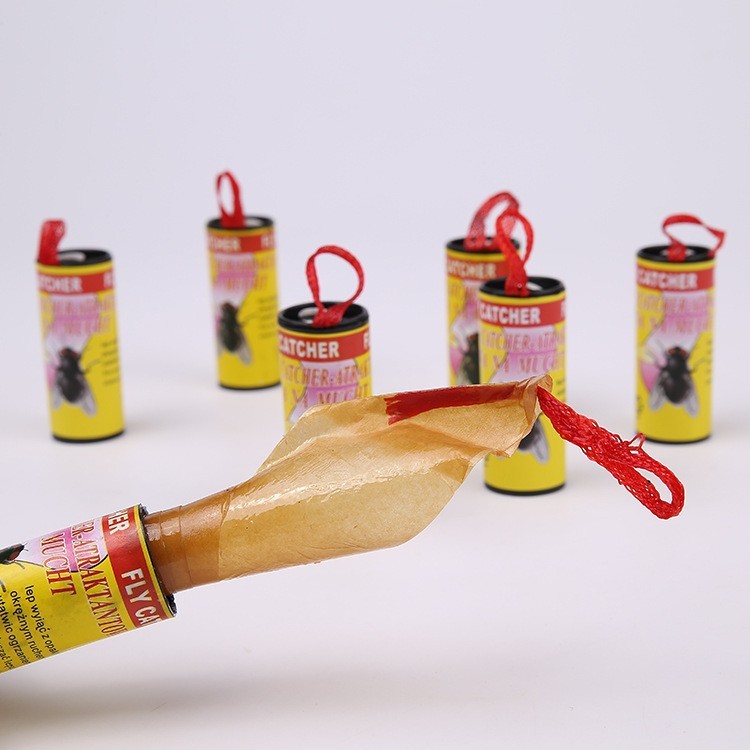
CAD files should be accompanied by a concise process and packaging description. The documented fly-roll process uses kraft paper coated with adhesive, placement into a plastic tube, application of a colored printed label sheet, placement of four units into a PVC blister shell, insulating with a colored printed paper card, and packing 24 insulating card units into one central box. This process information should remain attached to the relevant drawing revision so the physical product and packaging interpretation do not diverge.
Commercial details also belong in the same controlled package. The listed minimum order quantity for fly rolls is 28,800 cards, and the stated delivery time for customized orders is one month. These values should be shown beside the product identifier rather than embedded ambiguously in a drawing note. The export markets listed for this product include South America, the Middle East, Southeast Asia, Africa, India, Pakistan, Uzbekistan, Brazil, Ecuador, Romania, Iraq, and others.
The inspection reference should identify each applicable production stage. The documented quality process covers raw material inspection, production process inspection, semi-finished product inspection, surface treatment inspection, assembly inspection, final product inspection, and packaging inspection. A CAD package that identifies which drawing or specification applies at each stage gives the production and quality teams a common reference.

For application review, the company identifies family rooms, catering and food facilities, industrial warehousing, agriculture and animal husbandry, and property or professional extermination as use environments. A design brief should state the intended environment because storage rooms, food-related facilities, warehouses, farm feed rooms, and utility areas may require different product and packaging discussions.
Custom development is supported through R&D, OEM, and ODM services. The company also records cooperation cases involving sticky mouse board exports to India, Brazil, and Peru. These cases demonstrate experience supporting supplier customers across multiple export markets, while the available data does not specify their CAD procedures or design revisions.
The certification records include trade mark certificates and Copyright certificate. One listed trade mark certificate carries number 第15322289号, and one listed Copyright certificate carries number 黔作登字-2020-F-00118638. These records support the company and brand identity but do not replace product drawings, specifications, or inspection records.
Data/Solution Comparison
| CAD Package Element | Recommended Information Link | Source-Supported Reference |
|---|---|---|
| Product identity | Product name, category, and revision status | Sticky rat traps, flypaper, cockroach traps, and custom fly-killing products |
| Manufacturing process | Process description connected to the approved drawing | Adhesive coating, tube placement, label application, blister packing, insulating, and central-box packing |
| Order requirements | MOQ and customized delivery time | 28,800 cards; one month for customized orders |
| Quality control | Inspection stage linked to the relevant specification | Raw material, process, semi-finished, surface treatment, assembly, final product, and packaging inspections |
| Application context | Intended use environment stated in the brief | Family rooms, catering, industrial warehousing, agriculture, and professional extermination |
Frequently Asked Questions (FAQ)
What should accompany CAD files for a custom rat-killing product?
Include the product name, product category, revision status, process description, packaging arrangement, order quantity, delivery requirement, intended application, and applicable inspection stages. The available product data specifically identifies a 28,800-card MOQ and a one-month customized delivery time for fly rolls.
How can packaging confusion be reduced?
Keep packaging information in the same controlled reference as the related drawing. For the documented fly-roll product, the sequence includes kraft paper with adhesive, a plastic tube, a printed label sheet, four units in a PVC blister shell, an insulating card, and 24 insulating card units in one central box.
Which manufacturing cooperation formats are available?
The company lists OEM manufacturing, ODM manufacturing, factory direct supply, bulk production with flexible small-batch orders, and long-term supply cooperation. Its stated R&D capability includes pest-control product development and customization services.
Final Conclusion & Recommendations
Use one labeled CAD package for each custom rat-killing product and keep the drawing revision, product category, process description, packaging structure, MOQ, delivery time, application environment, and inspection stages together. The documented fly-roll specification provides a concrete reference for this structure, while OEM and ODM manufacturing support the customization model. For detailed technical solutions or support, please contact TOM LI at bob@jinwen-goods.com.
About Us
Yiwu Jinli Commodity Co., Ltd., operating under the MUSTRAP brand, was established in 2010 and integrates R&D, production, and sales for pest-control products. Its product team provides R&D, OEM, and ODM customization services, while independent workshops and production lines support a stated daily output of 80,000 units. The company’s main products include sticky rat traps, flypaper, cockroach traps, and other pest-control products.
Its listed credentials include trade mark certificate No. 15322289 and Copyright certificate No. 黔作登字-2020-F-00118638. The company has served clients across multiple industries through export cooperation cases in India, Brazil, and Peru.

Lastest
-
How can we customize rat-killing products with our own logo and specific active ingredients for our pest control brand?
2026-09-27 -
How do I find a manufacturer that can customize glue formulation for bonding silicone to metal?
2026-09-27 -
What options do I have for custom-made fly-killing products with our own logo and packaging?
2026-09-27 -
How do I choose the right active ingredients for custom-made pest control products targeting agricultural pests?
2026-09-27 -
How can I customize eco-friendly pest control products with my own brand logo and specific active ingredients?
2026-09-27
SUBSCRIBE
INQUIRY